From my 2026 vantage point, PUBG Labs’ Respawn Royale feels less like an old limited-time mode and more like a design thesis: what happens when you strip a battle royale down to pure, frantic decision-making? I remember the pitch—Paramo, squads, 500% damage, and a 100-second respawn timer—and I still think it is one of the cleanest experiments PUBG ever ran. It was chaotic, yes, but it was also readable. Every shot could kill. Every death had a countdown. Every comeback depended on the teammates still standing. In a 2026 landscape full of respawn systems and forgiving recovery loops, that combination still feels sharp. If you are reading this now, do not expect a live queue; this was a 2021 Labs window. The value is in what it taught us.
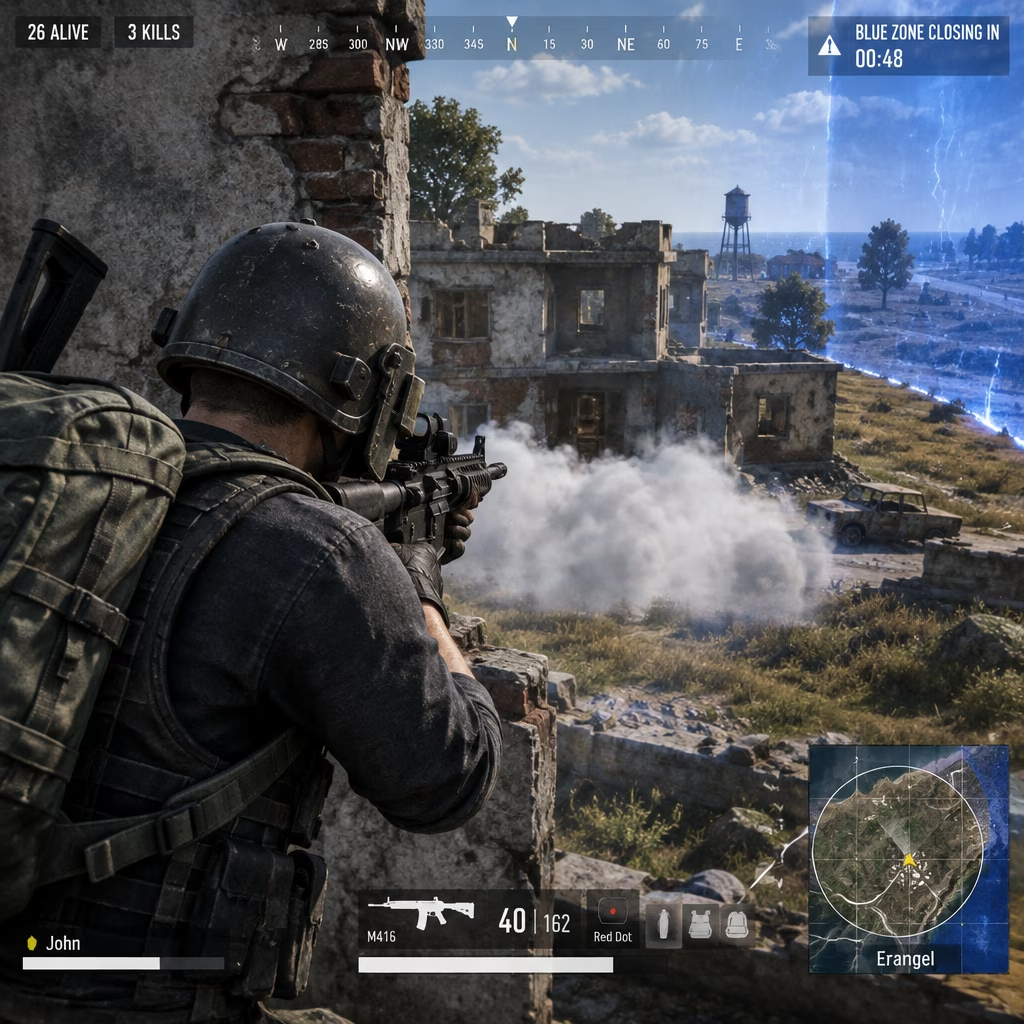
The One-Shot Rule Changes Everything
The first thing I noticed was the damage. Firearms, melee weapons, and throwables all received a 500% increase, which turned every fight into a one-shot-kill scenario. That sounds simple, but it changes the psychology of a match. You do not trade armor and heal through mistakes; you respect sightlines, corners, and the sound of a grenade pin. How do you make a battle royale more forgiving and more brutal at the same time? Respawn Royale answers that question with a timer. Dying is easy. Getting back into the game is also easy—if your squad is still alive.
Death Is a Timer, Not a Full Stop
When you are eliminated, you immediately switch to spectating mode. A 100-second respawn timer appears on your screen, and during that period you can choose which kit you want to spawn with. I liked that small layer of agency. I was not just waiting; I was planning. If at least one squad member is still standing when the timer completes, you rejoin the fight. If your squad is wiped completely, everyone is eliminated from the match. That rule is the heart of the mode. It rewards survival, communication, and the discipline to avoid a full wipe. Isn't that the real fantasy of a respawn mode—not infinite lives, but a second chance earned by your team?
No Loot, Just Kits
Respawn Royale removed weapon looting and added the choice of three different spawn kits. That decision kept the focus on action. I did not have to clear a building for a better scope or argue over ammo; I picked a role and got into the fight. The kit can be changed each time you respawn, so I found myself watching my remaining teammates and adjusting. If they needed smoke cover, I leaned toward the DBS kit. If they needed long-range pressure, the AWM kit made more sense. If the fight had collapsed into close quarters, the Sawed-off kit was the blunt answer.
| Kit | Core weapons | Ammo | Extras |
|---|---|---|---|
| DBS kit | DBS with Holographic Sight; Deagle with Red Dot Sight | 12 Gauge x28; .45 ACP x7 | 2 Smoke Grenades |
| AWM kit | AWM with 3x Scope; Crossbow with 4x Scope | .300 x35; Bolts x25 | Ghillie Suit |
| Sawed-off kit | Sawed-off | 12 Gauge x4 | Close-range pressure |
That table is not just nostalgia for me. It shows how cleanly the mode separated preparation from execution. In most battle royales, looting is a second game. In Respawn Royale, the second game was the respawn choice.
Paramo’s Pressure Cooker
Paramo hosted the mode with up to 7 other squads, which meant 20 to 32 players in squads. The map's open lanes and vertical cover made the 500% damage feel even more dangerous. The Blue Zone still functioned normally, so camping a respawn timer was never safe. I had to keep moving, keep checking the timer, and keep asking whether my squad could afford one more fight.
The Labs rules also removed some familiar comforts: no vehicle spawns, no secret room keys, no death cam, no observer, and no replays. The mode used FPP and TPP, disabled 1-man squads, and ran with no knocks or DBNO. That last detail mattered. There was no downed state to stabilize; fights ended fast. Labs games did not provide XP, Career stats, Survivor Pass progress, BP, or additional rewards. In 2026, that sounds almost radical. A mode existed to test an idea, not to feed a progression treadmill.
Why I Still Think About It
What I remember most is the rhythm. A fight would break, a teammate would fall, and the squad would shift from attackers to survivors. The 100-second timer became a countdown to either relief or elimination. I would watch the spectate screen, pick a kit, and listen to the last teammate breathe. Would they hold the angle? Would they hide? Would they make the one mistake that ended the whole squad? That tension is why Respawn Royale still matters to me in 2026. It was not just chaos. It was a tight loop of risk, loss, and comeback, and it understood that a respawn system is only as good as the squad that keeps the door open.